
ZIV
Track and Find Digital Experience
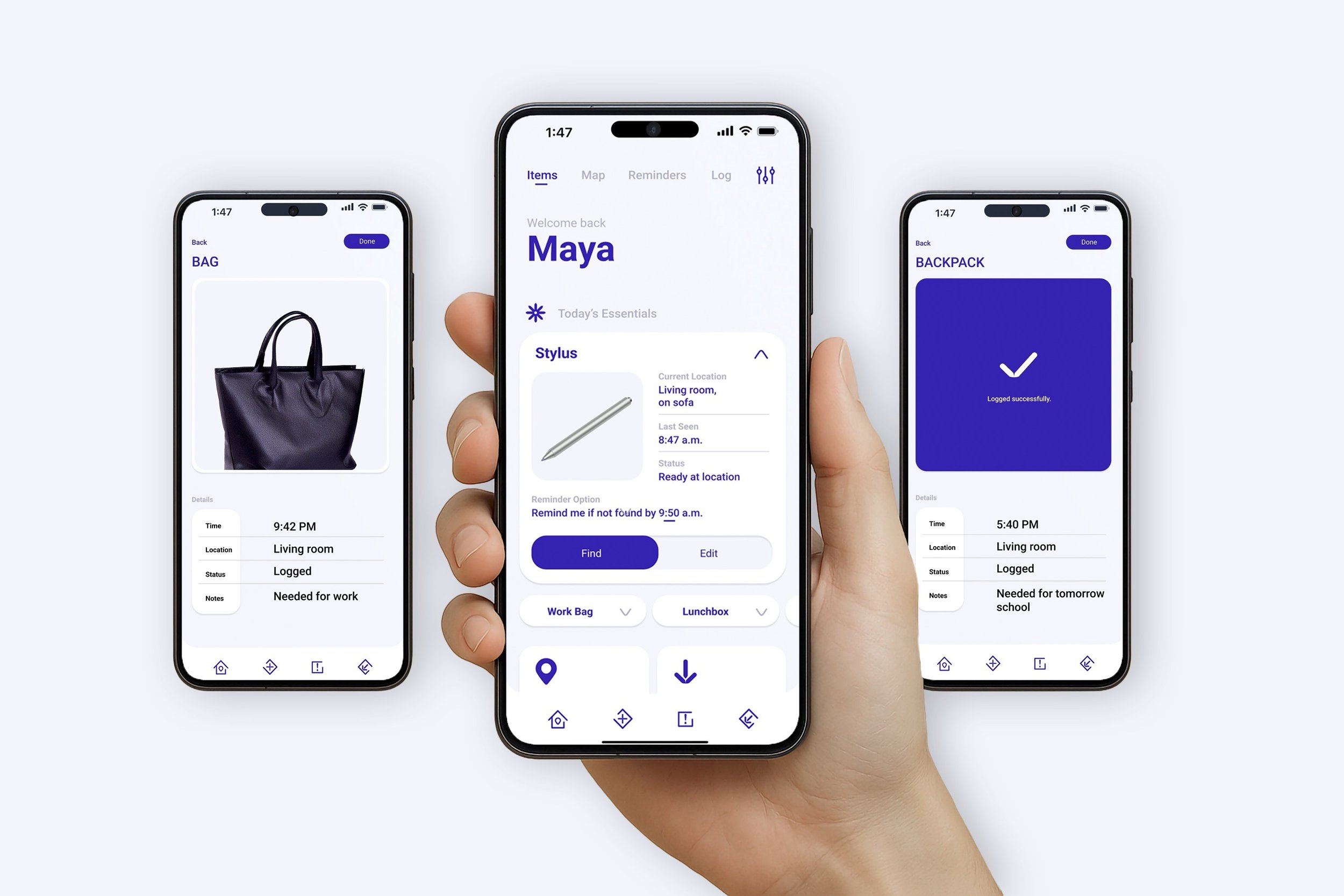
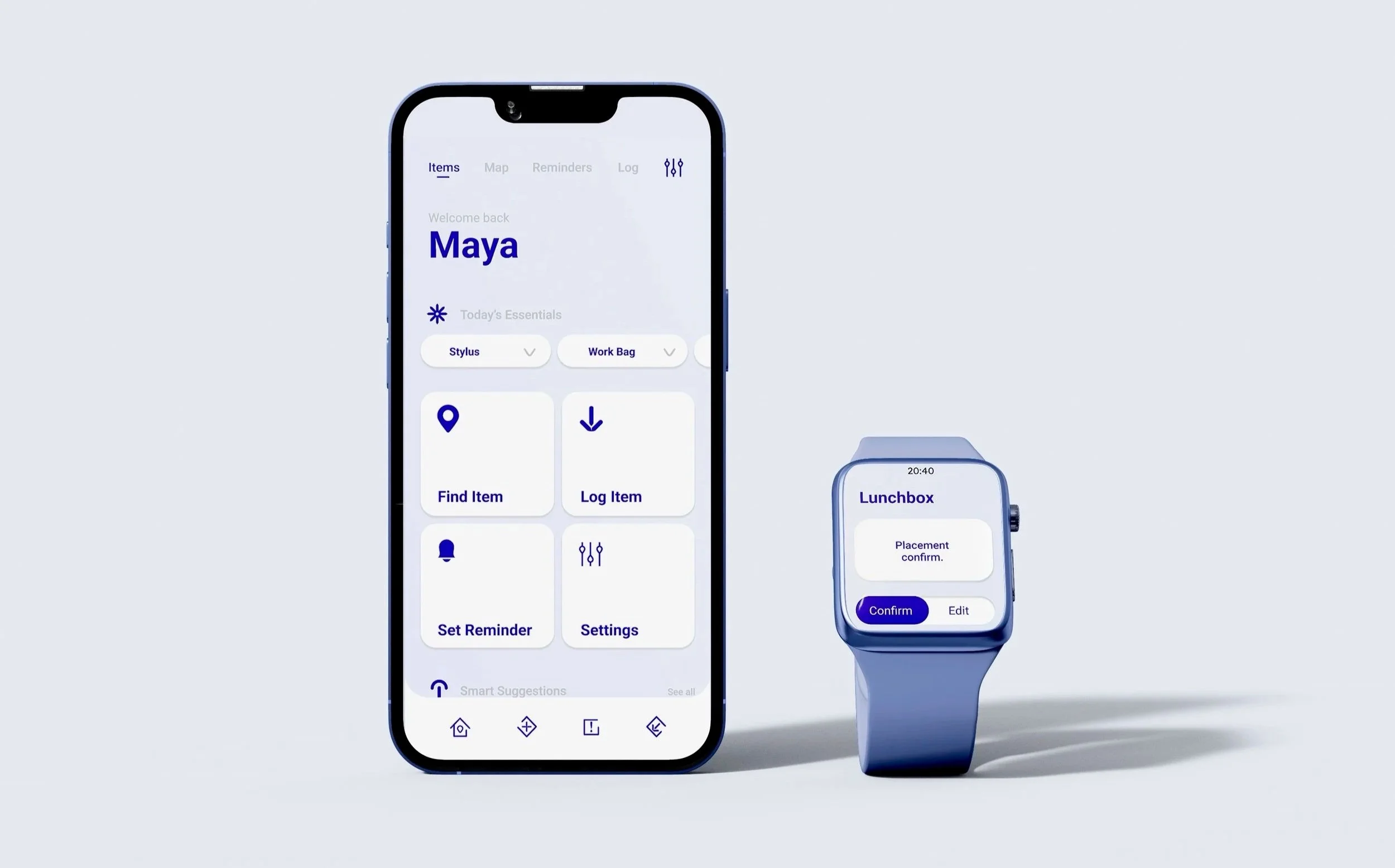
Ziv is focused on designing a multi-device system for tracking and managing everyday objects in the home. The project explores how spatial sensing, connected devices, and interaction design can reduce the cognitive load of remembering where things are.
Scope of work: UX research · system design · interaction design · prototyping · interface design
People don’t just lose objects, they lose time, attention, and control. In shared households, items are frequently moved, misplaced, or forgotten, creating daily friction. Existing solutions rely heavily on manual tracking, placing responsibility on the user instead of the system.
Problem
Mission
Ziv helps people stay organized by privately remembering, tracking, and locating everyday essentials across spaces and devices. The goal is to shift the burden of memory from the user to the environment.
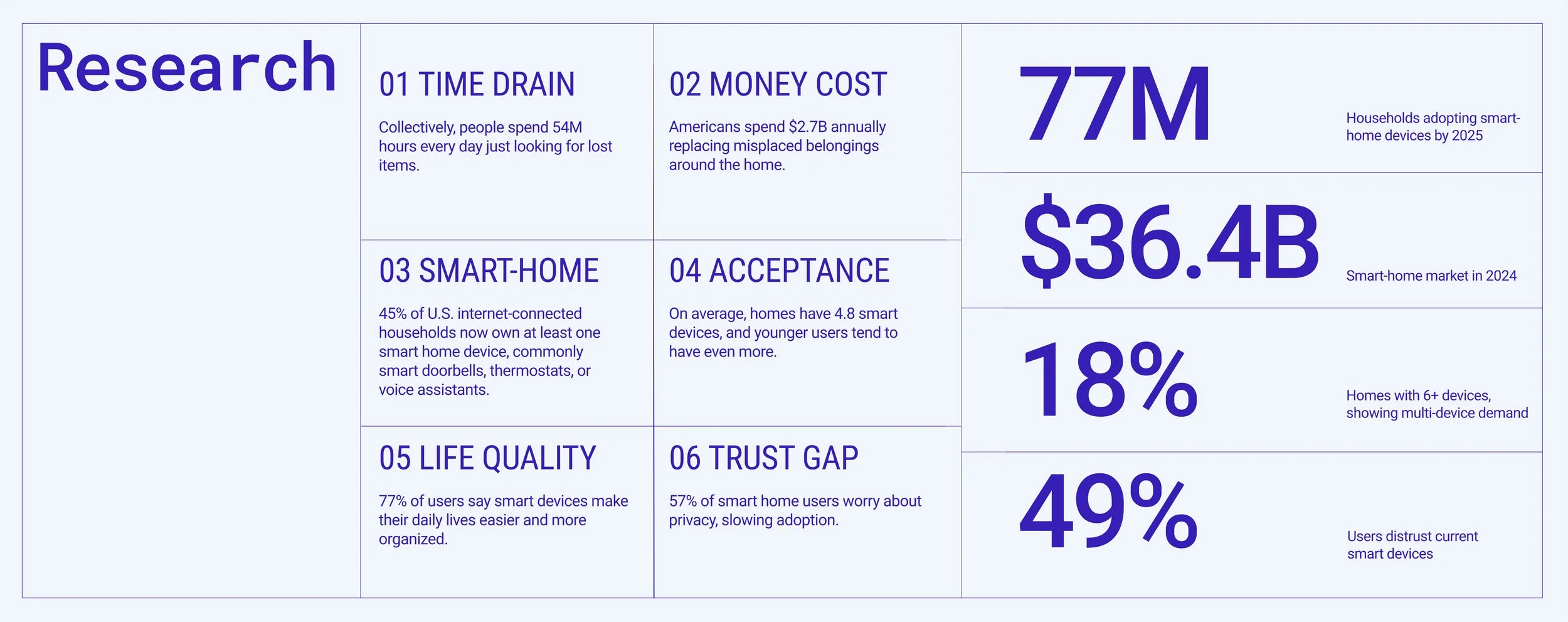
The primary user is a working parent managing a busy, multi-person household. Responsibilities are shared, but memory is fragmented. The user needs a system that can quietly support daily routines without requiring constant input or attention.
User
System overview
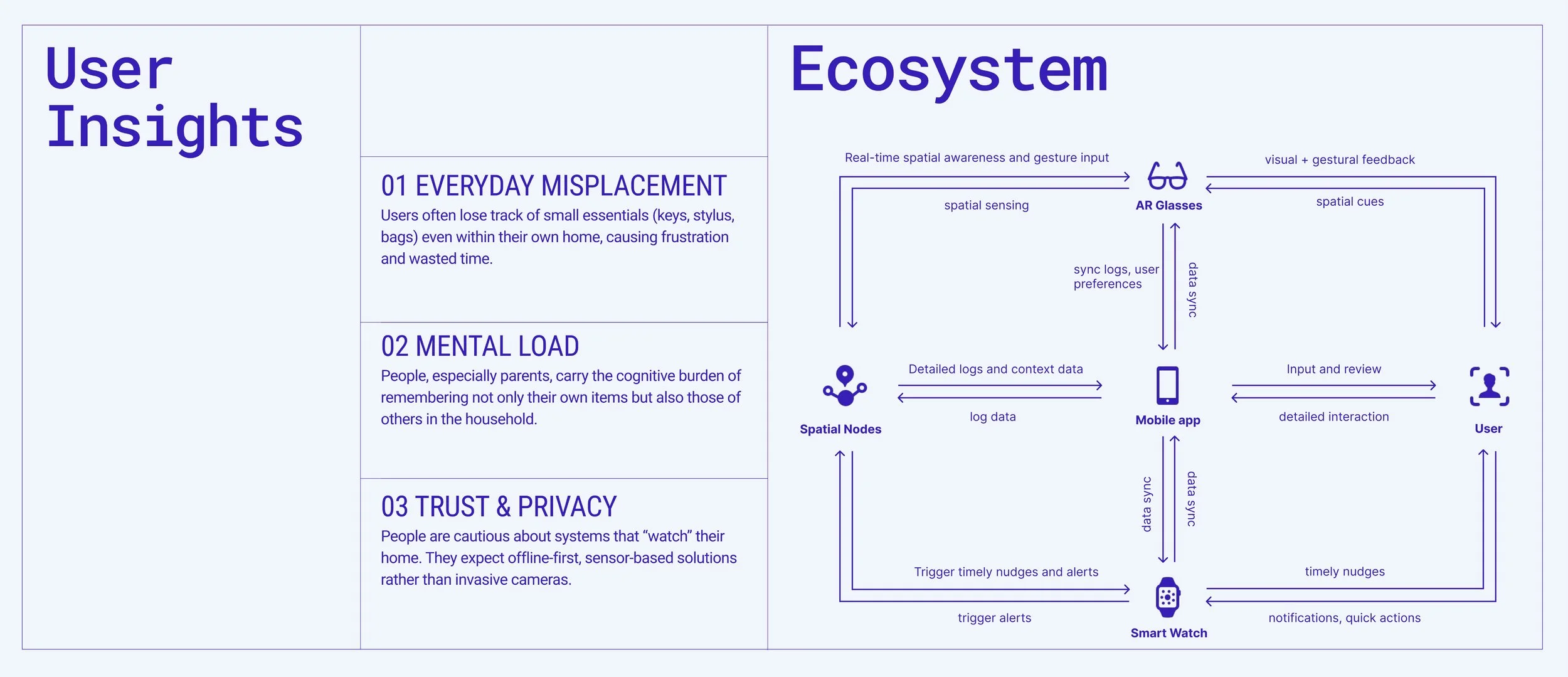
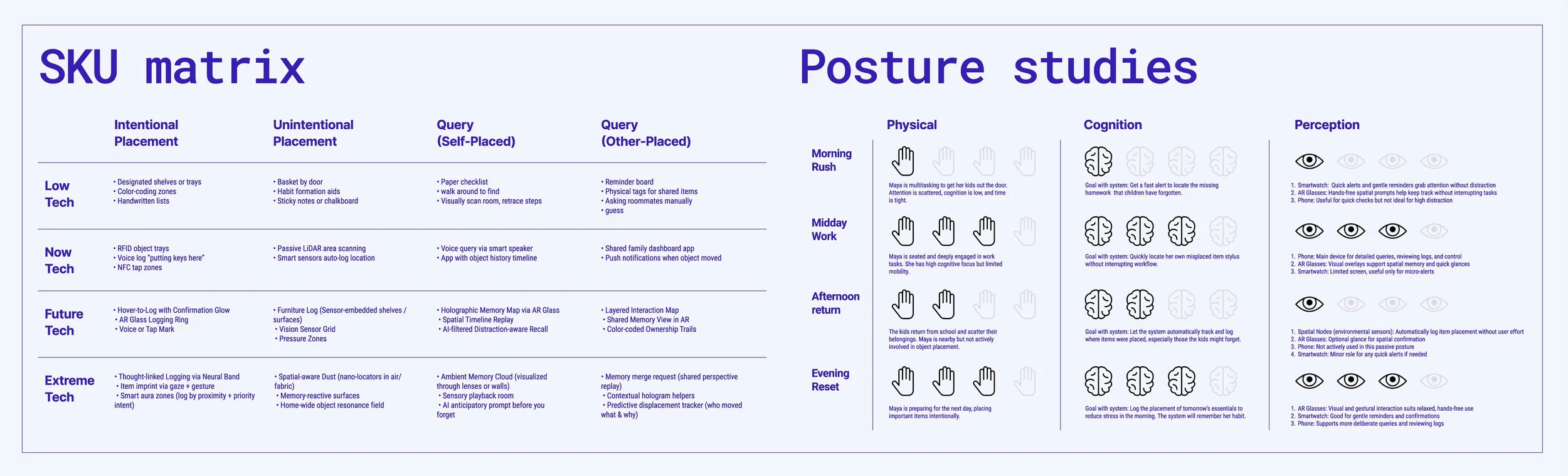
Ziv is designed as a distributed system across mobile, wearable, AR interfaces, and home sensors. Each device supports a different level of interaction, while the system as a whole maintains a unified spatial understanding of the environment.
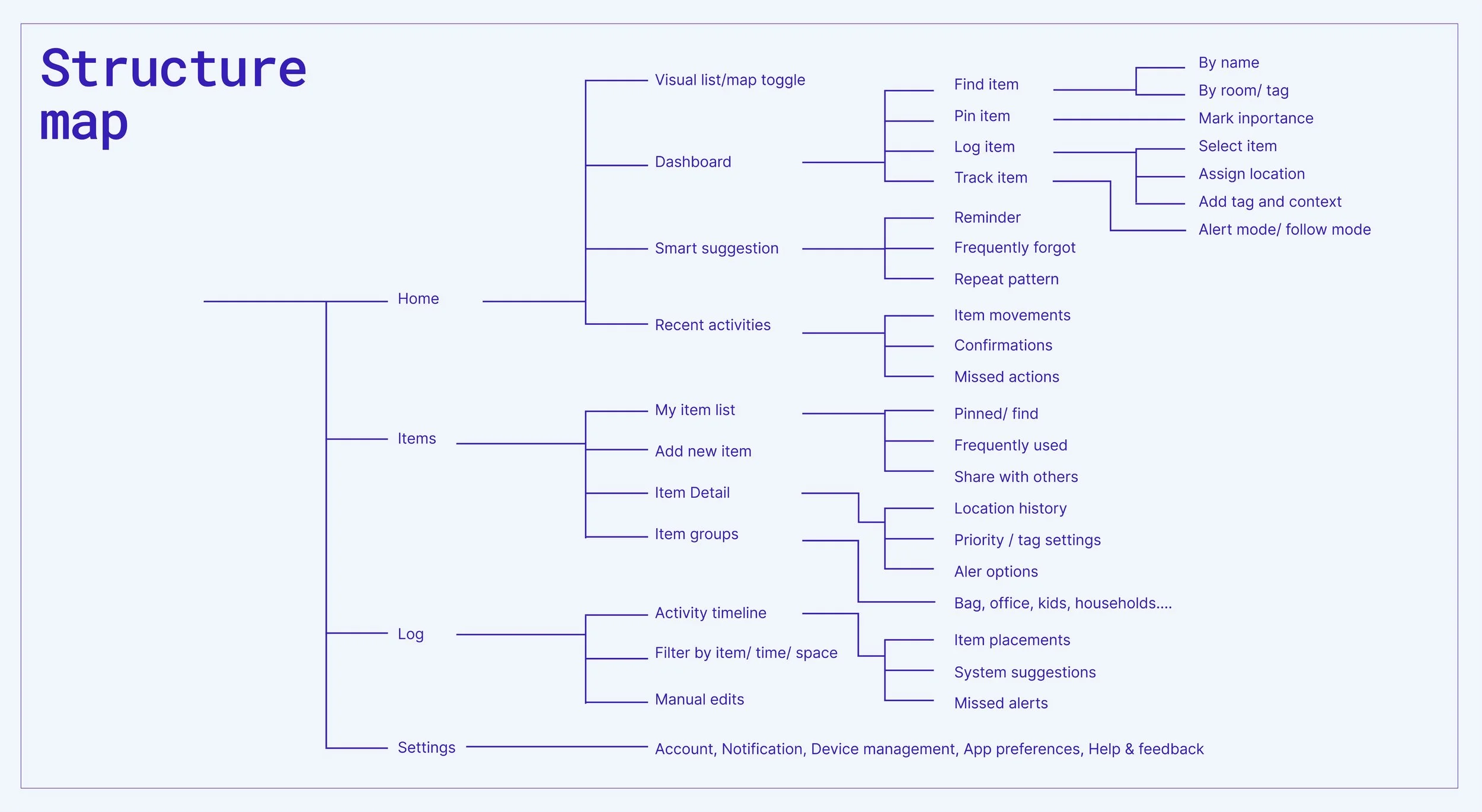
Ziv continuously maps the home environment using spatial sensing technologies. Items are either logged or detected, tracked over time, and surfaced through reminders, search, or guided interactions. The system minimizes manual input by relying on passive awareness.
How it works
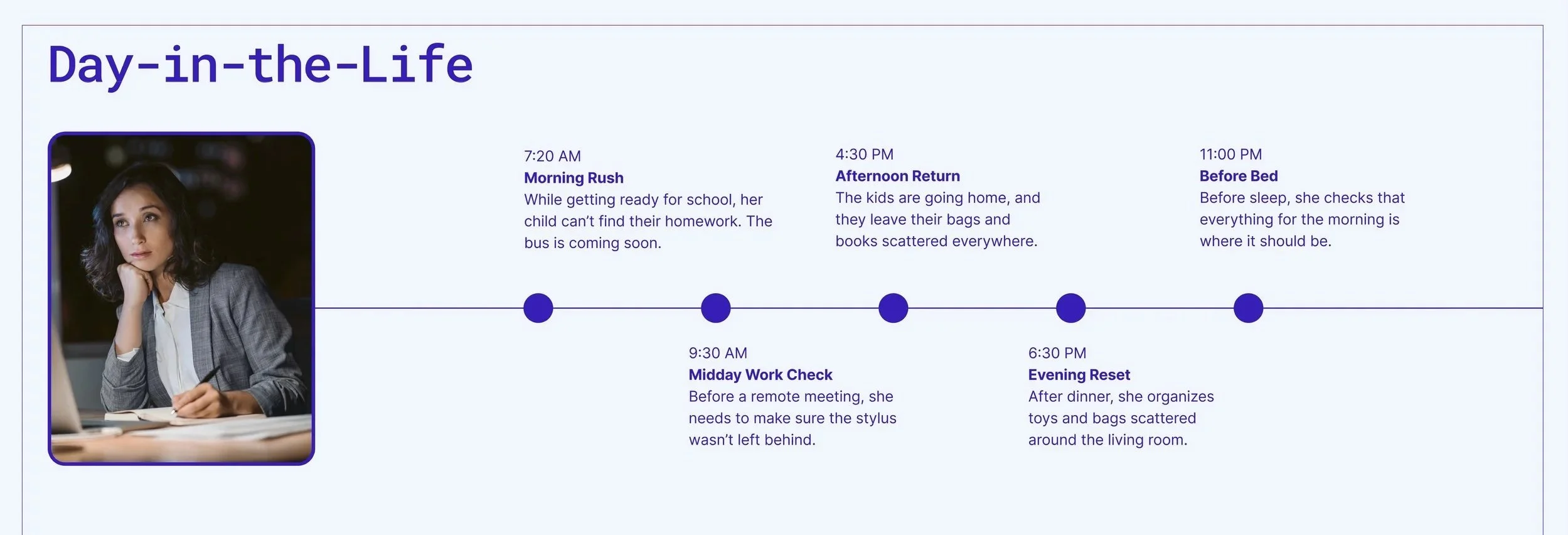
Ziv supports everyday moments such as rushing out the door, preparing for work, or resetting the home at night. In each case, the system provides timely cues, helping users quickly locate items or avoid forgetting them altogether.
Scenarios
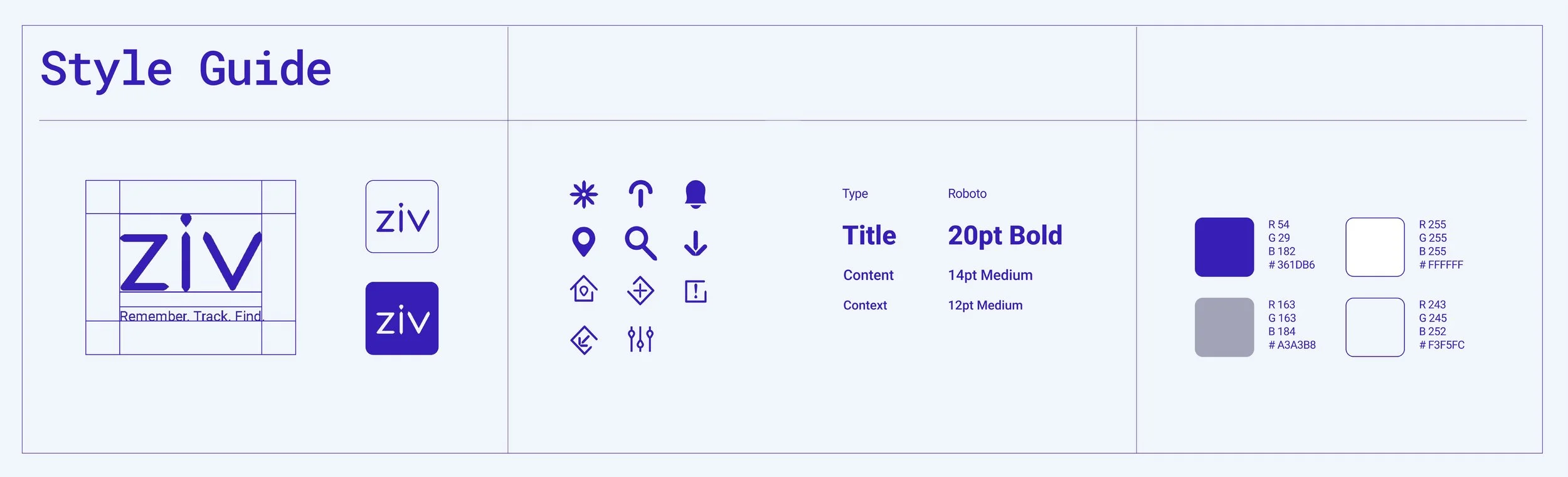
Interface design